



Project Supported by the National Land Afforestation Promotion Organization “Forest Fund for Green and Water”
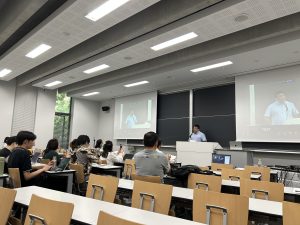
The “Model Forest” framework, proposed at the 1992 Earth Summit, facilitates stakeholder collaboration for sustainable forest management across 60+ regions worldwide. On September 19, 2025, a public seminar was held in Kyoto featuring experts from RECOFTC (Secretariat for the International Model Forest Network-Asia).
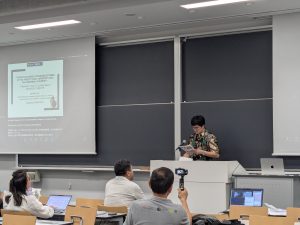
 Public Seminar
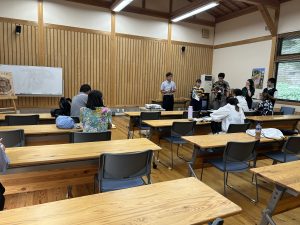
The event brought together 30 in-person and online participants to discuss regional cooperation and sustainable forestry:
-
Opening Remarks: Dr. Keisuke Kojiro (Kyoto Prefectural University) reflected on the 2004 origins of Kyoto’s Model Forest movement.
-
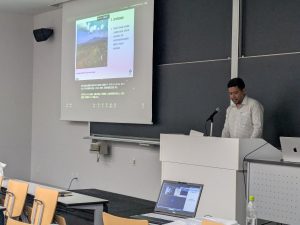
Keynote: Mr. Julian Atkinson (RECOFTC ) presented “What is a Model Forest?”, highlighting Asian case studies where diverse stakeholders define and practice sustainable forestry.
-
Kyoto’s Role: Hiroko Tanaka from the KMFA Secretariat detailed local developments of the Kyoto Model Forest Movement and reported on the Annual Meeting held in the Philippines in February and the Global Forum in Canada in May.
-
Next Generation: Mr. Mitsunori Nakatani (Kyoto Prefectural University) shared insights from a student exchange program with Mulawarman University, Indonesia.
Field Excursion
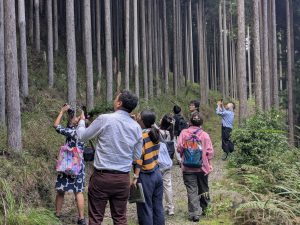
Following the seminar, participants visited the Kyoto Kitayama Sugi (Cedar) Village General Center. Mr. Matsumoto, Director of the Kyoto Kitayama Log Production Cooperative, explained the history and unique characteristics of Kitayama Cedar, as well as current business initiatives.
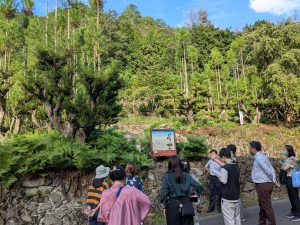
The group then moved to Sugisaka to tour a demonstration forest of Kitayama Daisugi—a unique form of sustainable forestry that is gaining international attention. RECOFTC members engaged in technical discussions regarding specialized techniques and the development of new sales channels.
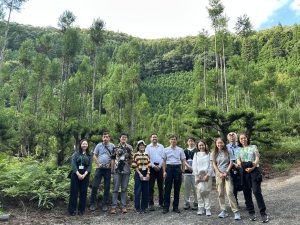
This seminar bridged local initiatives with international expertise, fostering a deeper understanding of community-based forest management. We remain committed to sharing our findings globally through these vital international networks.
This project was conducted with a grant from the National Land Afforestation Promotion Organization’s “Forest Fund for Green and Water.”
Related Information